Tournai guide
The Camuches walk
A day on foot through more than 2,000 years of history, from the Grand-Place to the cathedral and the banks of the Scheldt: the walk we give our guests, with our favourite food stops.
- 7.3 km on foot
- 31 stops
- one day with the breaks
- Loop starting from Les Camuches de la Banque, a stone's throw from the Grand-Place
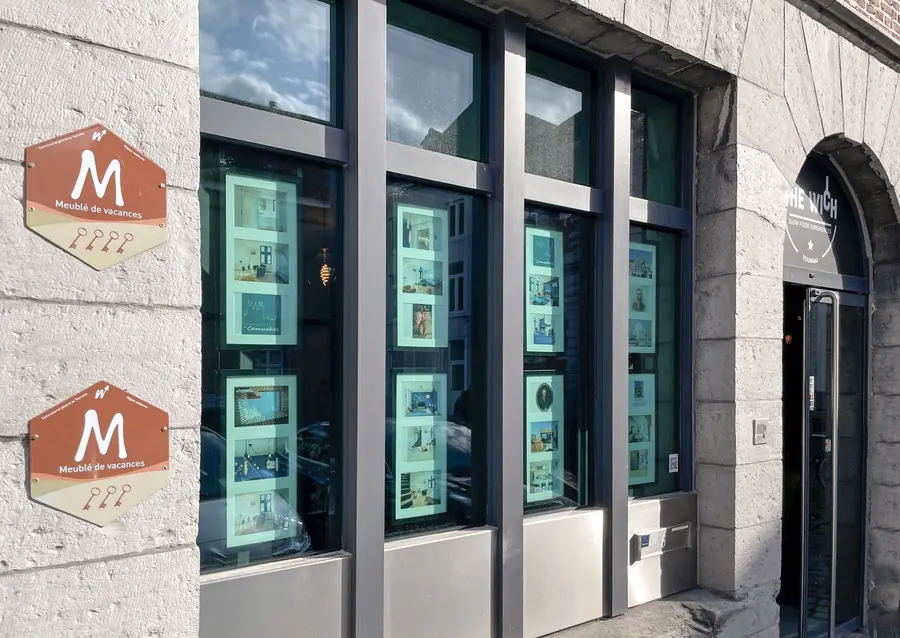
Les Camuches de la Banque
Place Roger de le Pasture 6
Your discovery of Tournai starts here. Ideally located in the heart of the historic centre, the Camuches put the city’s main monuments, museums, restaurants and shops within walking distance. Take the time to look up: every street reveals a piece of Tournai’s heritage.
Food stop
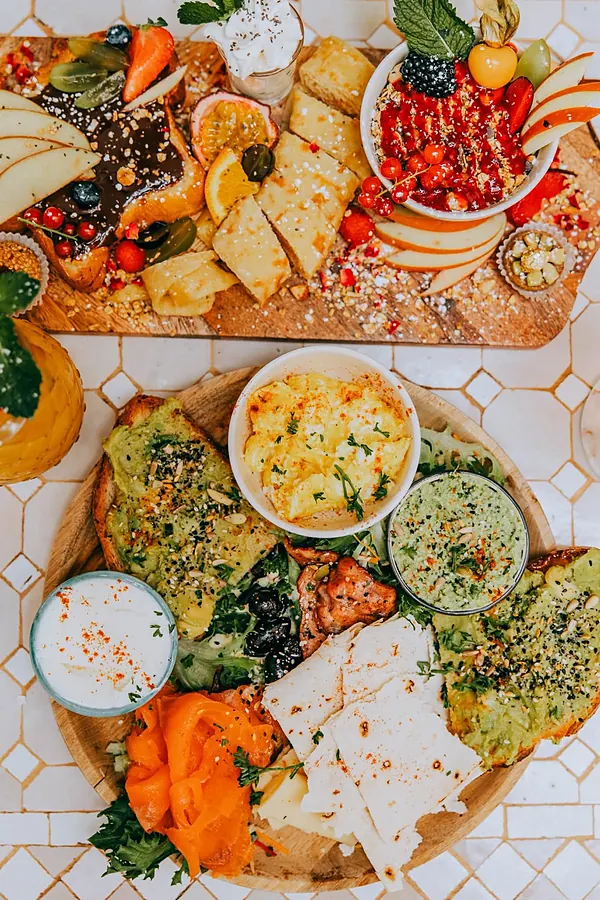
Breakfast at Baba
Grand-Place 35
Start the day on the Grand-Place (Grand’Place 31): breakfast, brunch, fresh eggs, fruit, toast and home-made pastries, to eat in or take away.
The Grand-Place
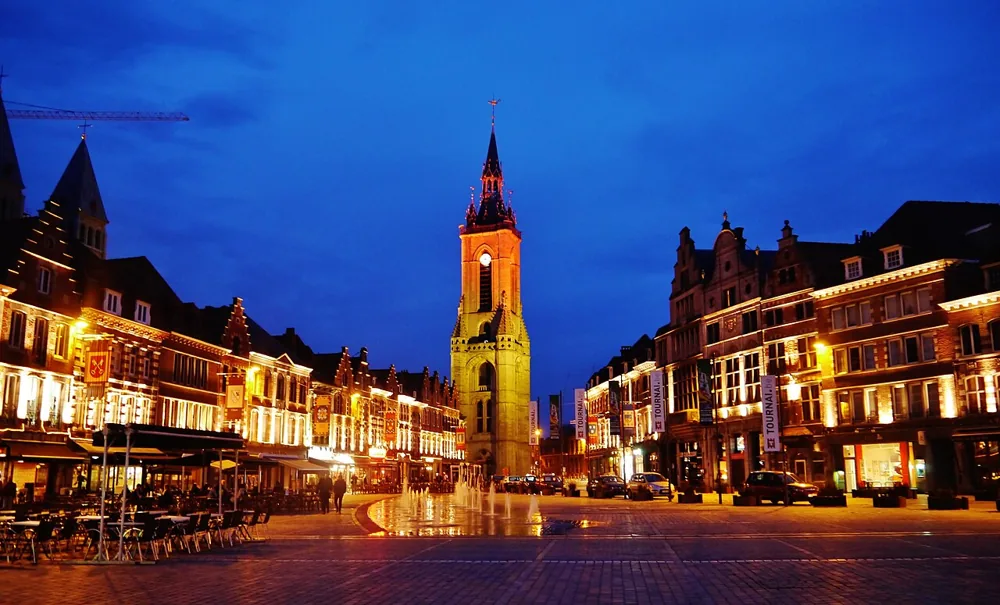
Grand-Place
For almost eight centuries, the Grand-Place has been the living heart of Tournai. Lined with historic houses, cafés and restaurants, it hosts markets, events and café terraces throughout the year. It is the ideal starting point for discovering the city.
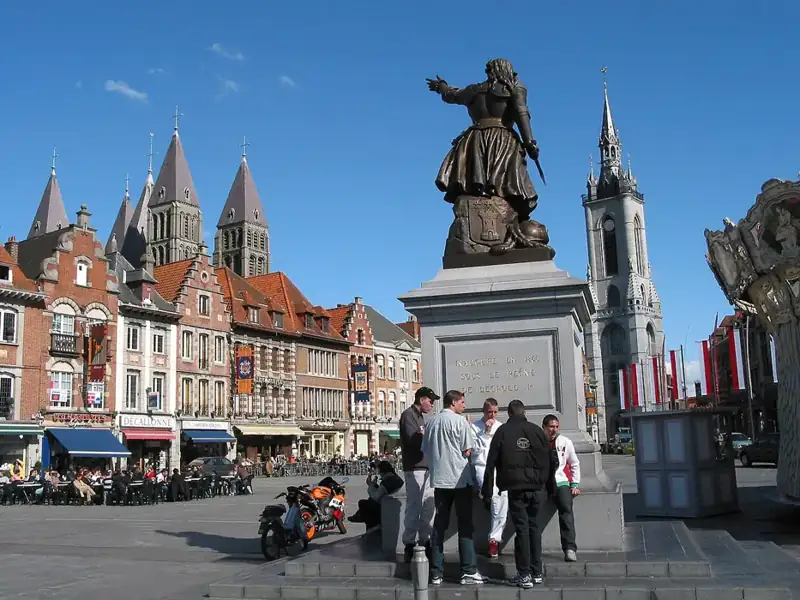
Jean-Pol GRANDMONT · CC BY 2.5 · Wikimedia Commons The statue of Christine de Lalaing
Grand-Place
In the middle of the Grand-Place, the statue of Christine de Lalaing, Princess of Espinoy, recalls the siege of 1581: in the absence of her husband, the city's governor, she led the defence of Tournai against the troops of Alexander Farnese and was wounded on the ramparts. The city eventually surrendered, but her courage was never forgotten.
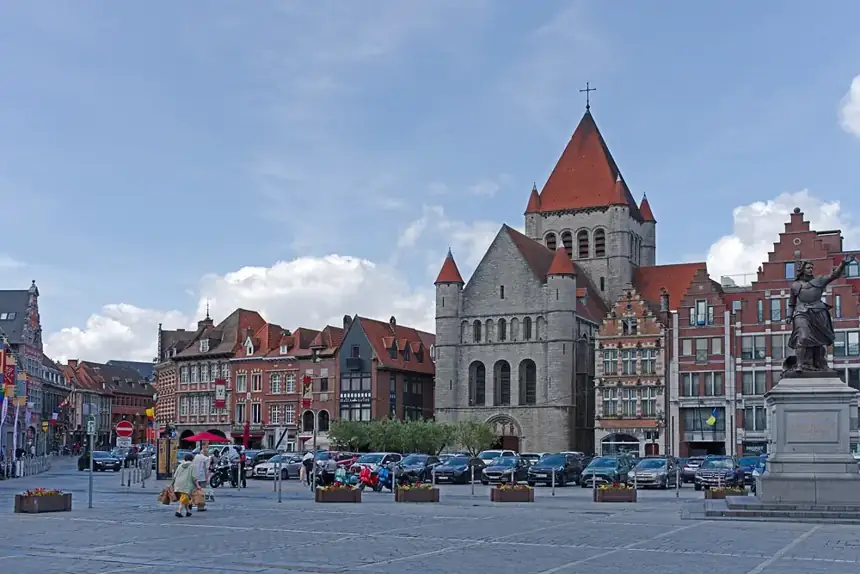
Ymblanter · CC BY-SA 4.0 · Wikimedia Commons The Church of Saint-Quentin
Grand-Place
At the far end of the Grand-Place, the Church of Saint-Quentin, first recorded in the 10th century, dates mostly from around 1200 and keeps its Romanesque look; its choir was rebuilt in Flamboyant Gothic style in the 15th century. Badly damaged by the bombing of 1940, it was rebuilt and reopened in 1968.
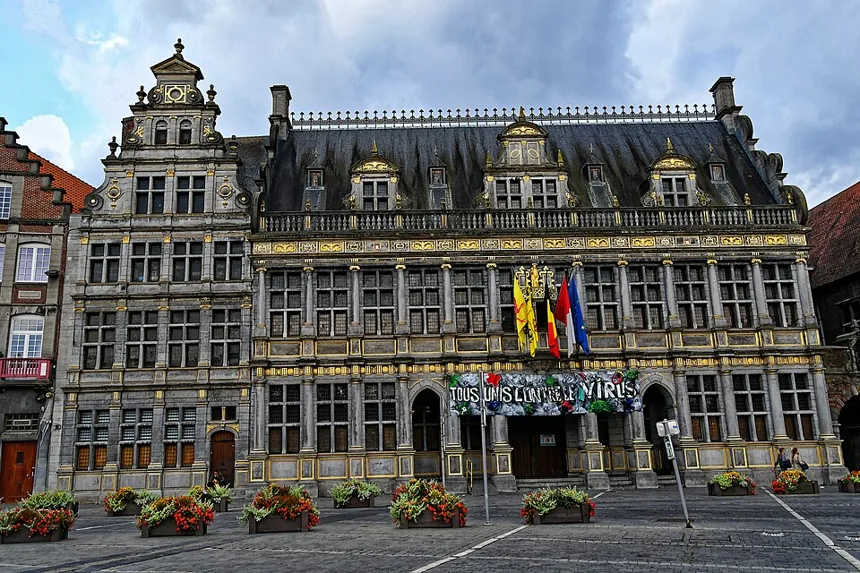
The Halle aux Draps
Grand-Place
Built in the early 17th century, the Halle aux Draps bears witness to the era when the textile trade made Tournai prosperous. Standing at the foot of the Belfry, it formed with it the economic and administrative centre of the city.
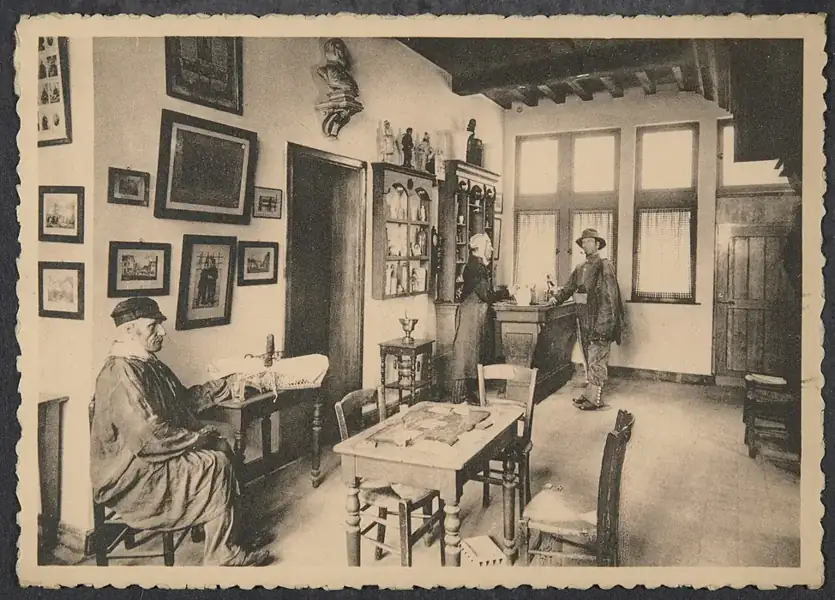
Public domain · Wikimedia Commons The MUFIM
Réduit des Sions 36
In the réduit des Sions, a 17th-century house is home to the Museum of Folklore and Imagination: 23 rooms tell the story of life in Tournai and its countryside since 1800 (a stocking maker's workshop, Belgium's oldest mobile chip shop…). On the top floor, a copy of the relief map of Tournai commissioned by Louis XIV shows the city in 1701. Closed on Mondays.
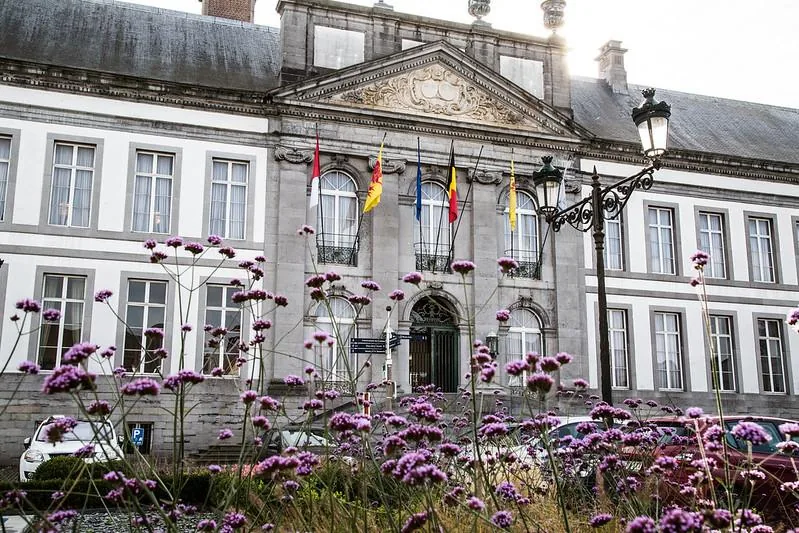
The Town Hall
Rue Saint-Martin 52
The Town Hall has been housed for more than four centuries in this elegant classical building. Still the seat of the municipal administration, it recalls the importance of Tournai as a great free city throughout its history.
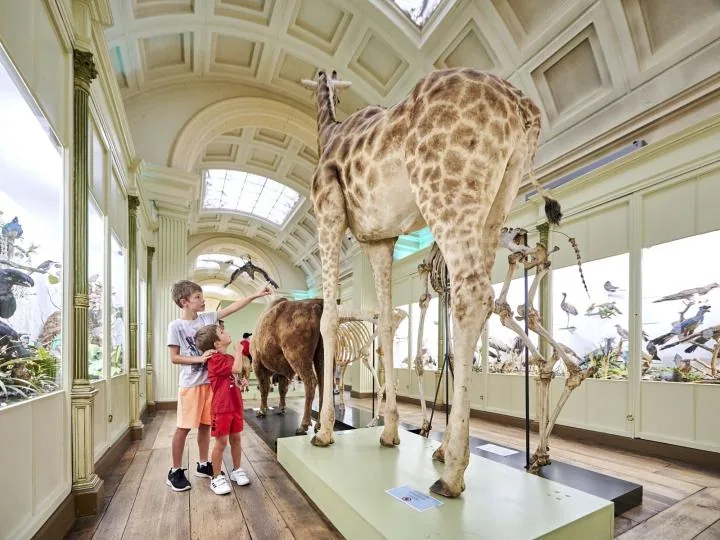
The Natural History Museum
Rue Saint-Martin 52 (cour d'honneur de l'Hôtel de Ville)
In the main courtyard of the Town Hall, Belgium's first museum open to the public (founded in 1828) has kept its 1839 gallery, a rare 19th-century cabinet of curiosities: stuffed animals, including the first elephant to arrive in Belgium. Its vivarium houses fish, reptiles, amphibians and tarantulas, with a greenhouse of exotic butterflies. Closed on Mondays.
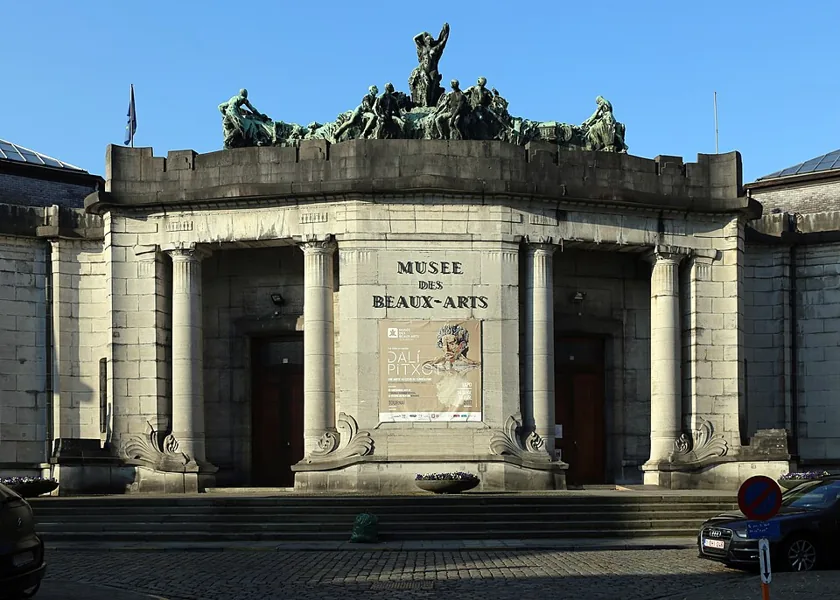
The Musée des Beaux-Arts
Enclos Saint-Martin 3
Opened in 1928, this building designed by Victor Horta is the only museum he ever created; its original shape is often compared to a tortoise or a star. Among other things, it houses works by Rogier van der Weyden, born in Tournai, and two paintings by Manet, the only ones held in a Belgian public collection.
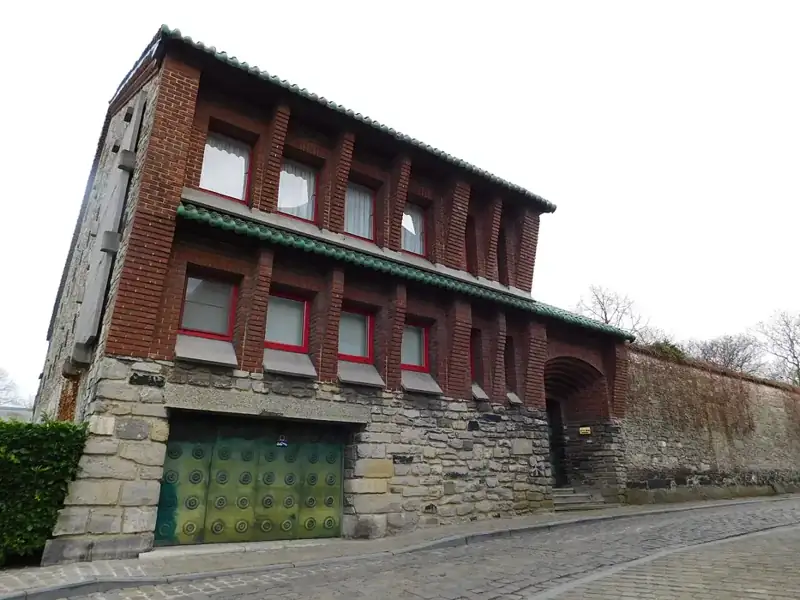
OliTreuj · CC BY-SA 4.0 · Wikimedia Commons The Maison Lacoste
Enclos Saint-Martin
Opposite the museum stands the house of the Tournai architect Henry Lacoste (1885-1968), a small masterpiece to admire from the street. Trained at the Beaux-Arts, he left his mark on his era with a style close to Art Deco, the use of solid wood and polychromy. His Camuche is at La Coopérative, boulevard Eisenhower 107, where “Lacoste answers Beyaert”.
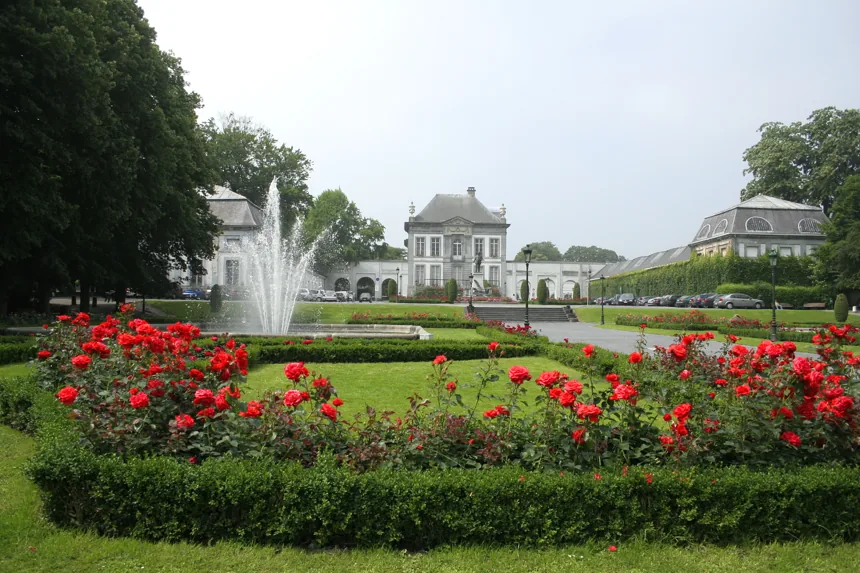
Return through the Town Hall park
Rue Saint-Martin
To pick up your walk again, cross the municipal park, which occupies part of the former estate of Saint-Martin Abbey. Its paths, remarkable trees and gardens provide a peaceful setting around the Town Hall. Stop by the bandstand before heading on to the cathedral.
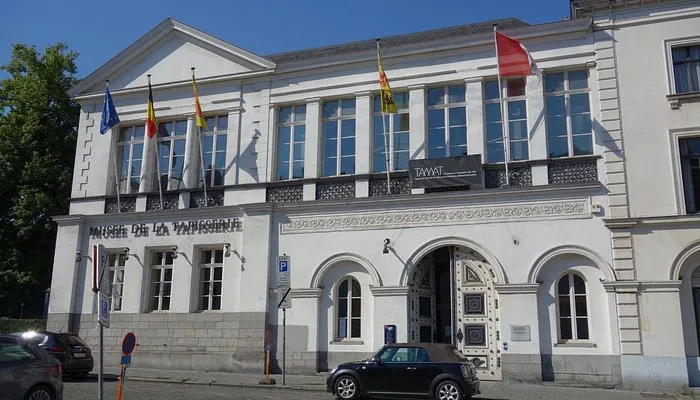
The TAMAT
Place Reine Astrid 9
On Place Reine Astrid, the Museum of Tapestry and Textile Arts occupies the former hôtel Gorin, an elegant neoclassical mansion from the 1820s. In the 15th and 16th centuries Tournai was one of Europe's great tapestry centres: the museum displays precious examples alongside modern and contemporary works, and houses a restoration workshop. Closed on Mondays.
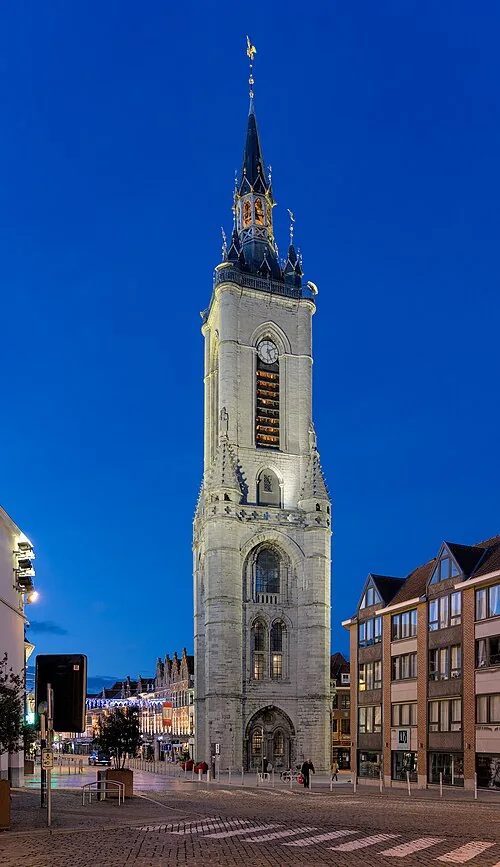
The Belfry
Vieux Marché aux Poteries
Built in the late 12th century, the Belfry is the oldest in Belgium. A UNESCO World Heritage Site, it symbolises communal liberties. From its summit, reached by 257 steps, it offers an outstanding panorama over the rooftops of Tournai.
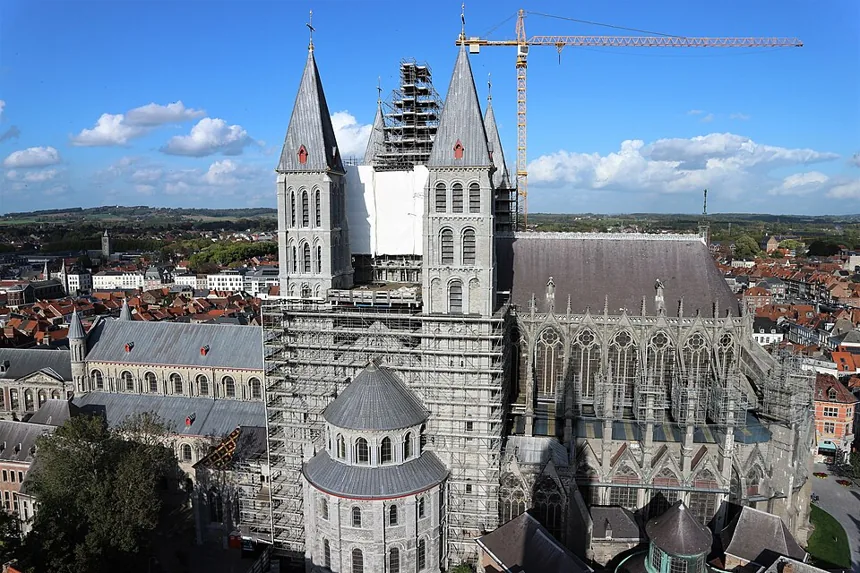
Notre-Dame Cathedral
Place de l'Évêché
A masterpiece of Romanesque and Gothic art, the cathedral is famous for its five towers that dominate the Tournai skyline. A UNESCO World Heritage Site, it is one of the most remarkable religious monuments in Belgium.
The Jardin de l’Évêché
Place de l'Évêché
A few steps from the cathedral, this garden offers a moment of calm in the heart of the city. It is one of the loveliest spots from which to admire the five towers and enjoy a moment of relaxation in the shade of the trees.
Jpcuvelier · CC BY-SA 4.0 · Wikimedia Commons The Carré Janson
Place Paul-Émile Janson
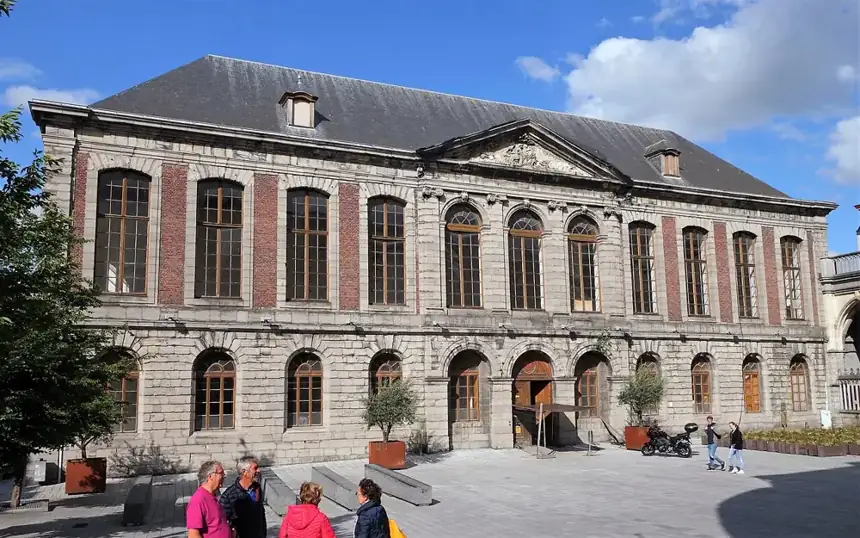
At the foot of the cathedral, on place Paul-Émile Janson, the former Anciens Prêtres site (the hôtel des Anciens Prêtres and the old State Archives building) has been restored and extended with contemporary architecture. Opened in August 2025, the Carré Janson houses a 250-seat atrium in the former courtyard, an urban garden bordered by a Romanesque wall and a belvedere 23 metres up, with a 360° view over the cathedral and the town. A 2,000 m² immersive trail is due to open there in early 2027.
The Tourist Office
Place Paul-Émile Janson 1
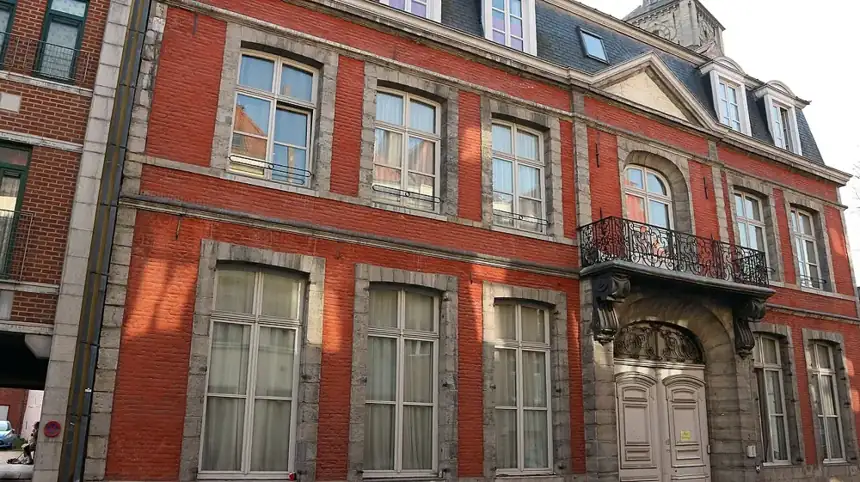
On Place Paul-Émile Janson, at the foot of the cathedral, Tournai's Tourist Office has occupied a house with Louis XVI façades since 2013, built over 12th-century medieval cellars now used for exhibitions. Maps, brochures, guided tours and advice: the ideal place to plan the rest of your stay.
Jpcuvelier · CC BY-SA 4.0 · Wikimedia Commons The Quartier Saint-Piat
Rue Saint-Piat
The historic cradle of Tournai, the Quartier Saint-Piat still has its cobbled lanes and medieval atmosphere. According to tradition, it was here that Saint Piat introduced Christianity to the region in the 3rd century.
Jean-Pol GRANDMONT · CC BY 3.0 · Wikimedia Commons Église Saint-Piat
Rue Saint-Piat
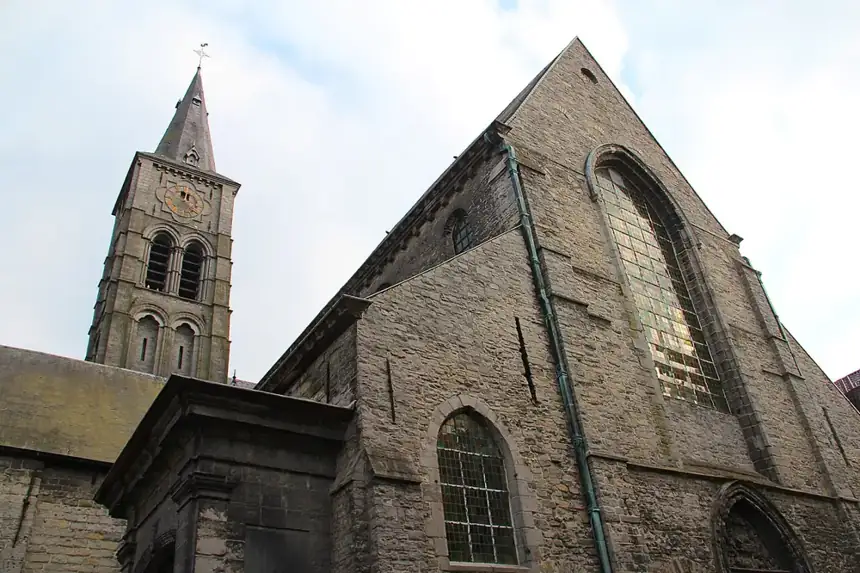
Dedicated to Saint Piat, the first martyr of the Christian faith in Tournai, the church dates from the 12th century: its nave is Romanesque and its choir Gothic, from the 13th century. Excavations carried out in 1971 revealed, beneath the building, a Merovingian basilica from the early 6th century. It also houses a Gothic eagle lectern dated 1403. Its opening hours are limited: it is best to find out before you visit.
Food stop
Tapas lunch at Corto Malté
Quai Saint-Brice 18
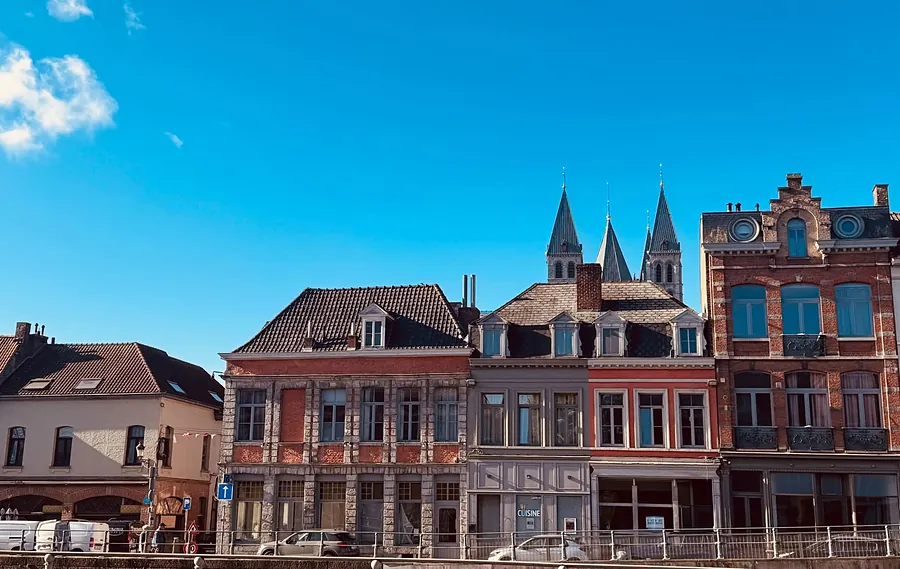
Take a break on the quai Saint-Brice (no. 18): tapas to share on the loveliest terrace in Tournai, on the banks of the Scheldt, with a view of the city and the cathedral.
Renhour48 · CC0 · Wikimedia Commons Église Saint-Brice
Place Clovis
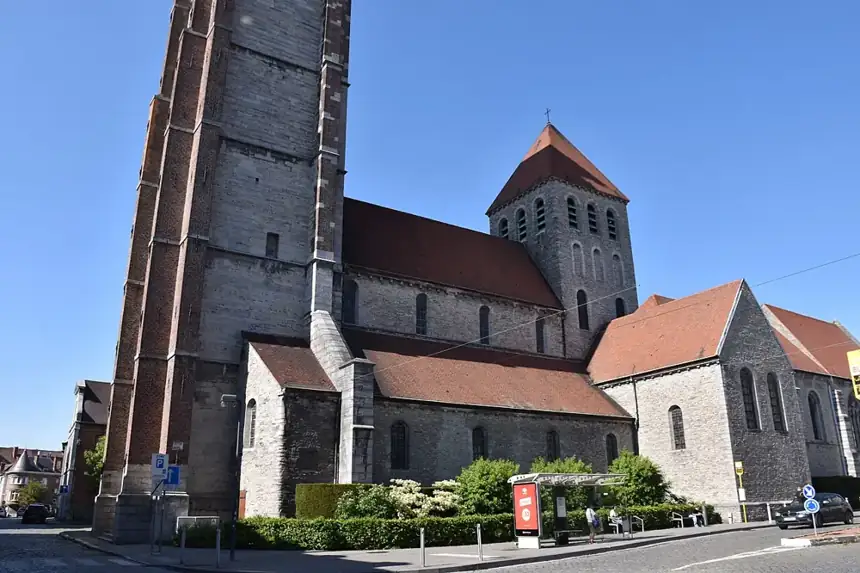
Built in the late 12th century on the right bank of the Scheldt, the church of Saint-Brice is a fine example of Romanesque art in Tournai: its Romanesque choir was replaced in the early 13th century by a Gothic one. Very close by, in 1653, the tomb of Childeric I, king of the Franks and father of Clovis, was discovered. Badly damaged in 1940, the church was rebuilt after the war. Its opening hours vary: remember to check them before your visit.
Jpcuvelier · CC BY-SA 4.0 · Wikimedia Commons The Maisons romanes
Rue Barre-Saint-Brice 10-12
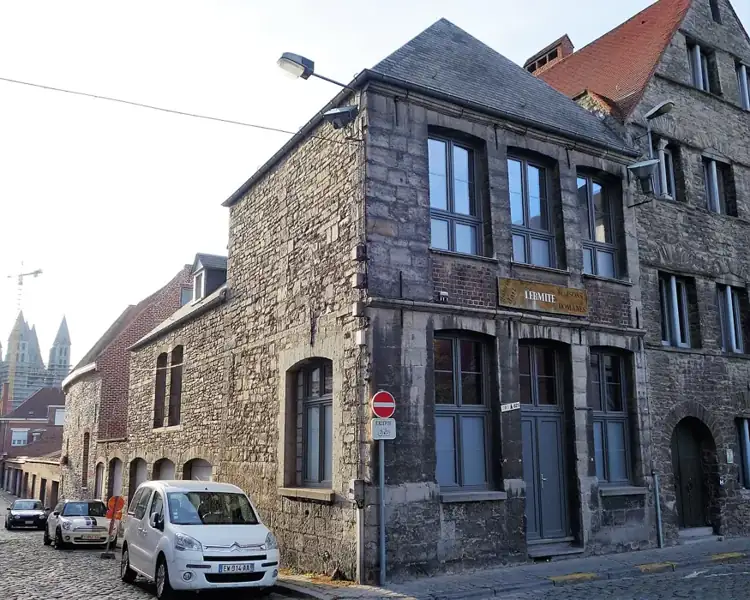
On rue Barre-Saint-Brice, two neighbouring houses dating from the late 12th century are among the oldest bourgeois houses in western Europe. Their Tournai stone façades, gables and windows with slender columns served as a model for the Flemish stone houses, the “stenen”. Damaged during the Second World War, they were restored between 1970 and 1972.
LucasD · CC BY-SA 4.0 · Wikimedia Commons Tournai Station
Place Crombez
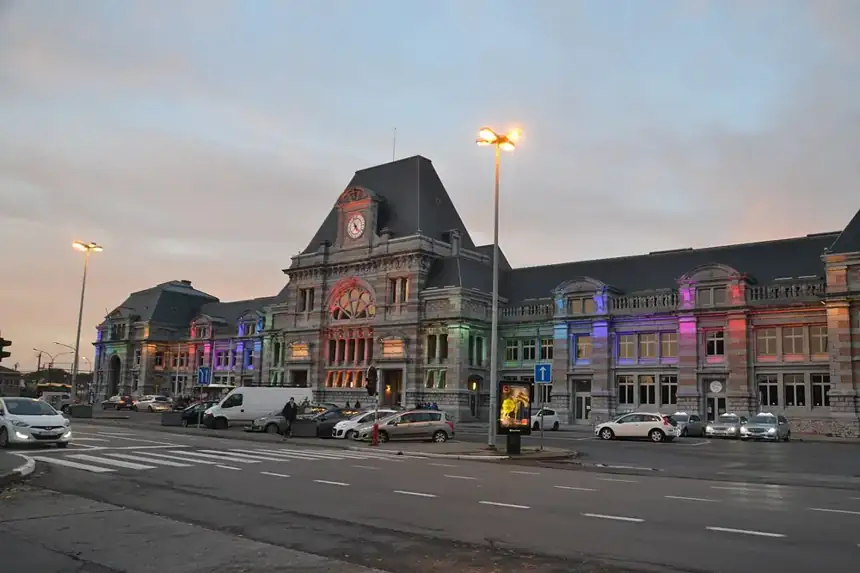
On Place Crombez, Tournai station was designed by the architect Henri Beyaert and built between 1874 and 1879. Badly damaged during the Second World War, it lost the great iron and glass roof that covered the platforms, since replaced by simple canopies. Its monumental building is still in service.
Food stop
Pâtisserie Quenoy
Place Crombez
Take a gourmet break on Place Crombez, a stone’s throw from the station, in a family-owned pastry shop run by the fifth generation of the Quenoys. Its 1920s décor was renovated in 2014. Éclairs and cakes inspired by the flavours of the region. Remember to check its opening days.
Jean-Pol GRANDMONT · CC BY 2.5 · Wikimedia Commons The Tour Henri VIII
Rue du Rempart
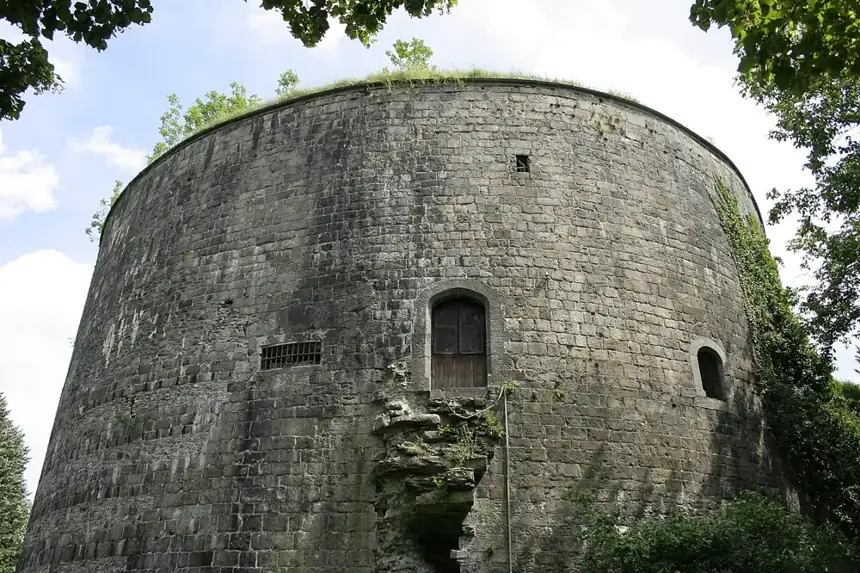
Impressive in size, the Tour Henri VIII is the last remnant of the English citadel built after the conquest of Tournai in 1513. It recalls a unique period when the city belonged, for a few years, to the Kingdom of England.
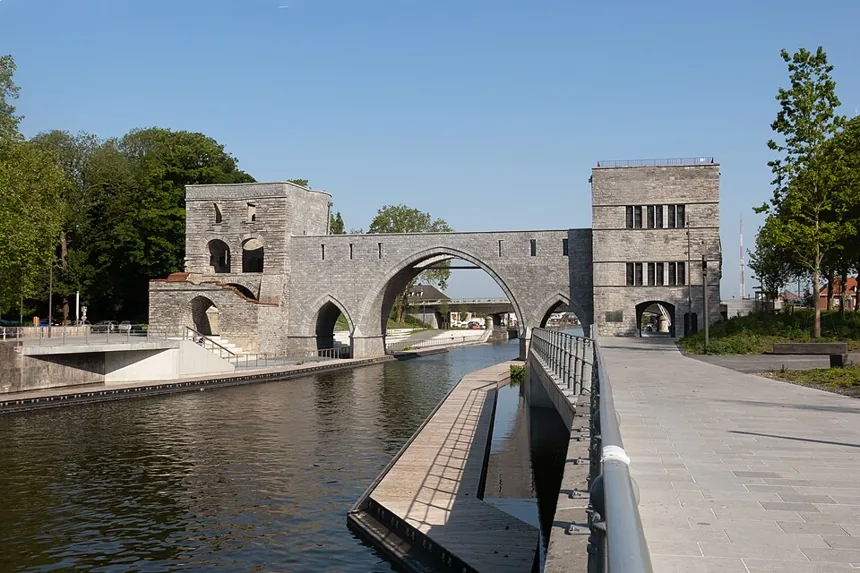
The Pont des Trous
Pont des Trous
A true symbol of Tournai, the Pont des Trous is one of the few medieval military bridges still visible in Europe. For several centuries it controlled the passage of boats on the Scheldt and protected the entrance to the city.
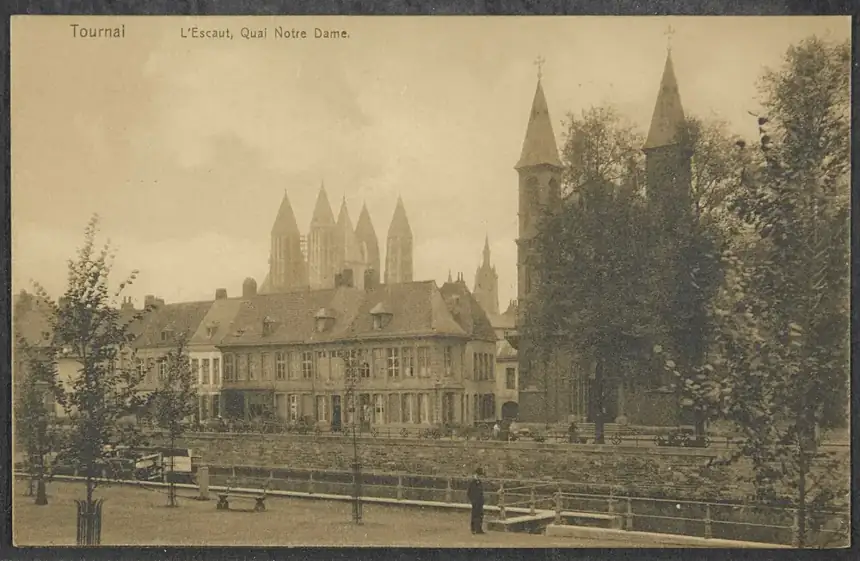
Public domain · Wikimedia Commons The quays of the Scheldt
Quai Notre-Dame
The Scheldt has shaped the history of Tournai. For centuries, this waterway carried stone, timber, coal and many other goods. Today, the quays are a popular place for a stroll, appreciated for their peaceful atmosphere.
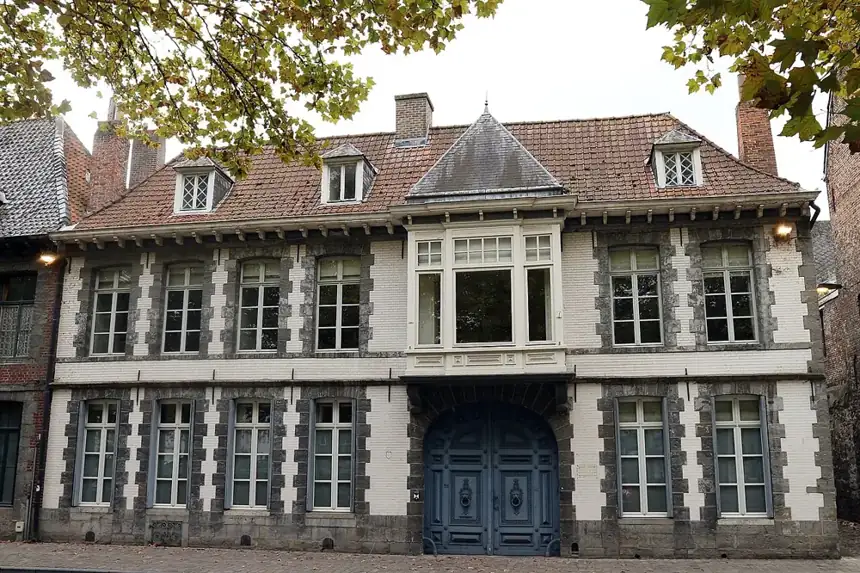
Jpcuvelier · CC BY-SA 4.0 · Wikimedia Commons The Quai des Salines
Quai des Salines
This quay offers one of the finest panoramas over the Scheldt and the monuments of Tournai. At sunset, the reflections on the water create a particularly pleasant atmosphere, ideal for a last break by the water.
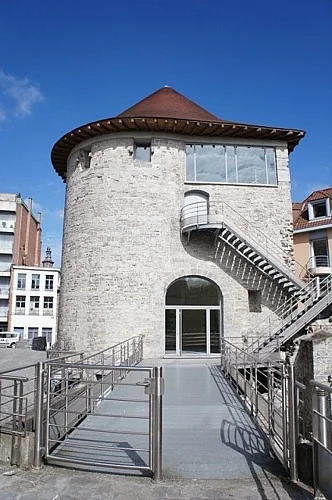
The Fort Rouge
Rue Perdue
The last historic stop on your walk, the Fort Rouge evokes Tournai’s military past. The city’s fortifications were strengthened in the 17th century by Vauban, making Tournai one of the most important strongholds in western Europe.
Food stop
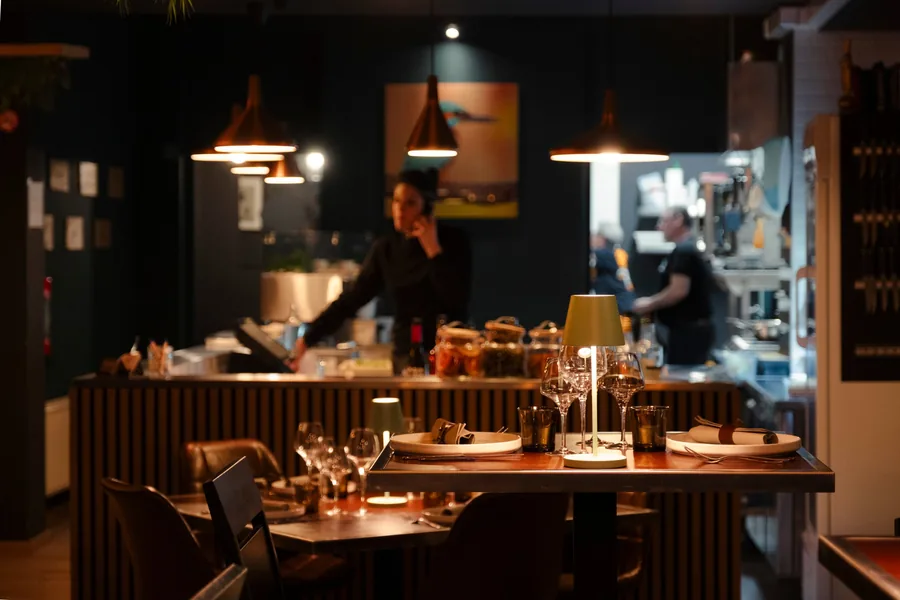
Dinner at the restaurant La Banque
Place Roger de le Pasture 6
Finish the day on the ground floor of the Camuches, at the restaurant La Banque: an elegant, welcoming setting and generous home-made dishes prepared with carefully selected produce.
Other routes
Tournai. Un point de vue différent
A 6 km discovery trail on both banks, through lanes, quays and little squares.
Tournai insolite
A map and a ten-question treasure hunt in search of unusual traces of the past of the City of the 5 Bell Towers.
Stay in the heart of Tournai
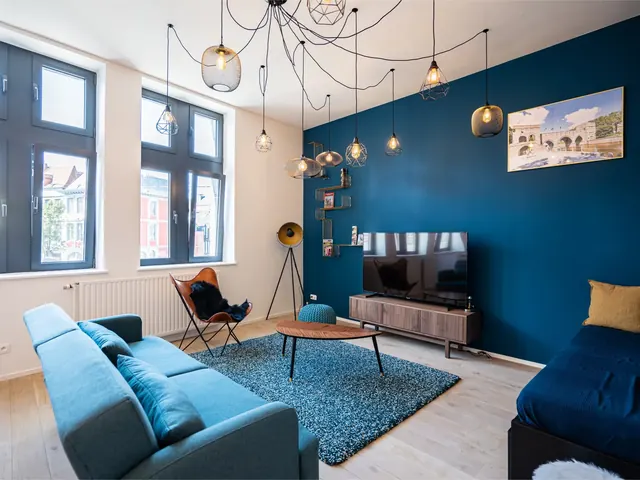
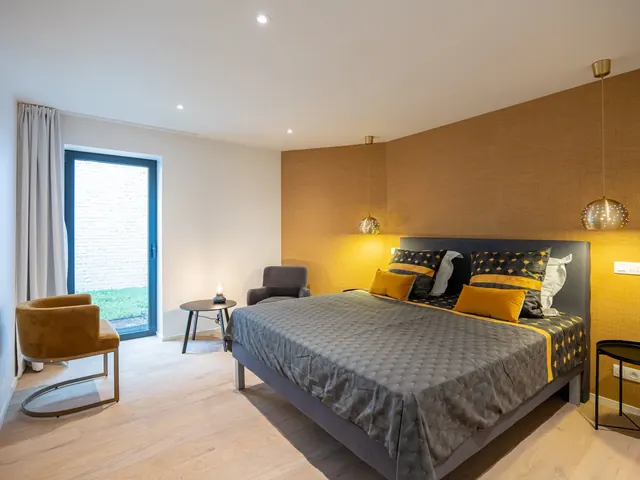
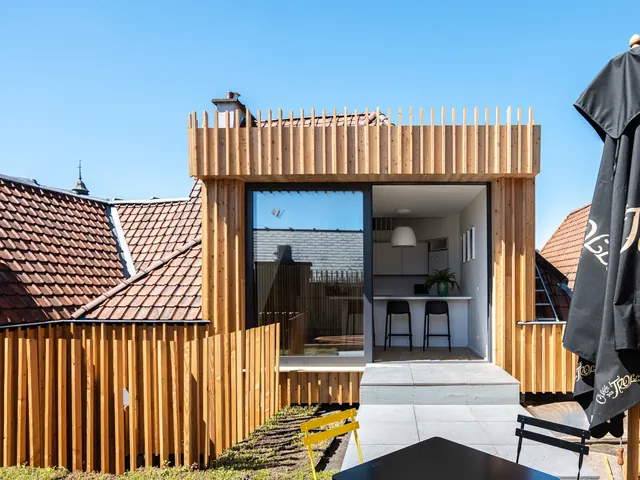
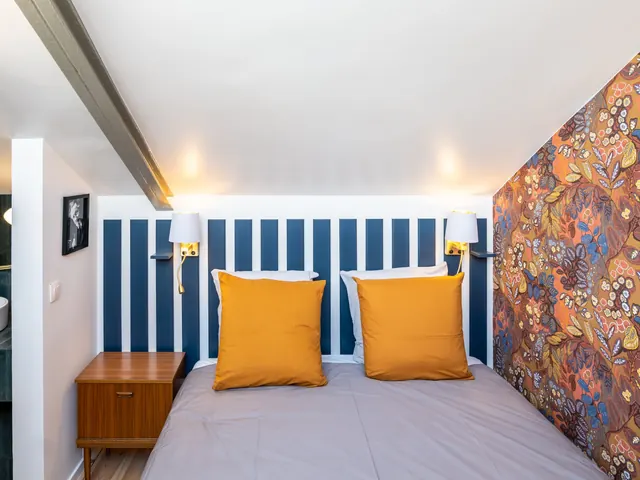
Les Camuches are eight holiday homes and apartments at the foot of the Grand-Place and near the station: the ideal starting point for this walk. Choose your dates below.
Availability
Choose your dates and we will show you which Camuches are free.
- La Camuche de François Joseph PeterinckFree on these datesAlready booked on these datesBook
- La Camuche d'Hippolyte BoulengerFree on these datesAlready booked on these datesBook
- La Camuche de René DescléeFree on these datesAlready booked on these datesBook
- La Camuche de Louise de BettigniesFree on these datesAlready booked on these datesBook
- La Camuche d'Hélène DutrieuFree on these datesAlready booked on these datesBook
- La Camuche de Marcel MichielsFree on these datesAlready booked on these datesBook
- La Camuche d'Henri BeyaertFree on these datesAlready booked on these datesBook
- La Camuche d'Henry LacosteFree on these datesAlready booked on these datesBook
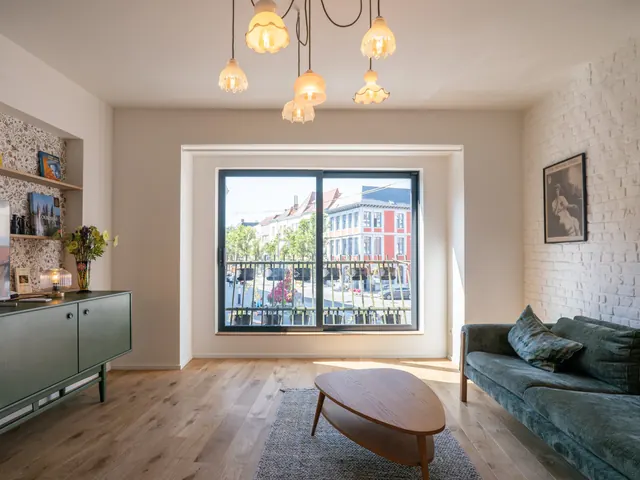
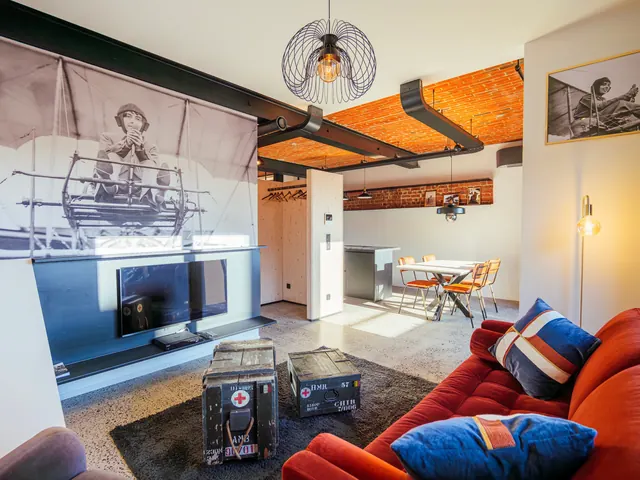
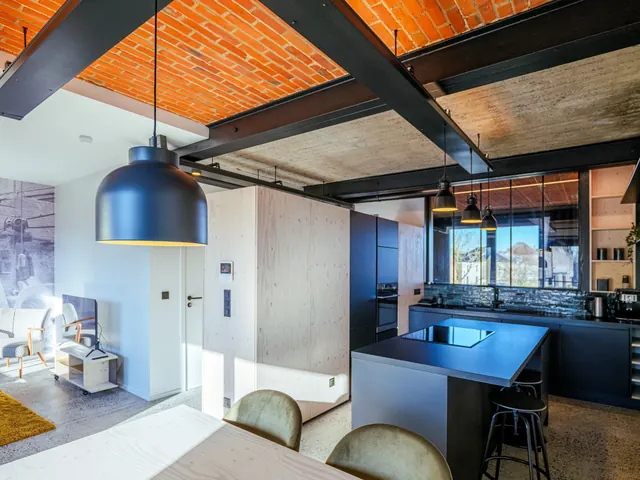
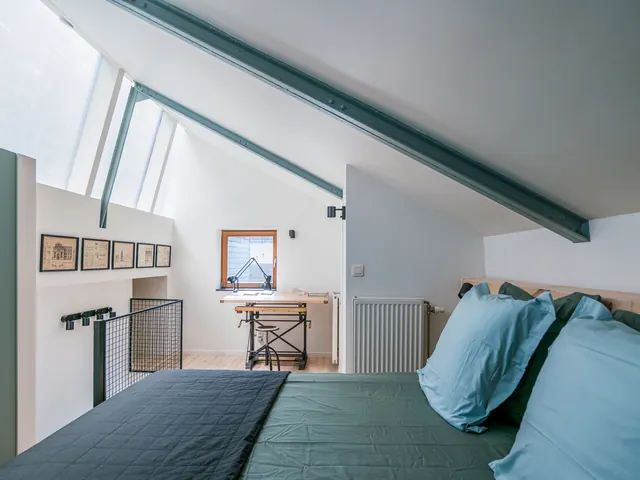
With a group or family?
The Camuches of Louise de Bettignies, François-Joseph Peterinck and Hippolyte Boulenger are free together on these dates. They connect with each other: up to 9 people under one roof.
The Camuches of François-Joseph Peterinck and Hippolyte Boulenger are free together on these dates. They connect with each other: up to 5 people under one roof.
Book all 3 CamuchesBook both CamuchesIndicative prices for 2 people, including the best current promotion. Rates and payment are handled directly on our elloha booking page, a solution supported and rolled out by VISITWallonia through the Regional Marketing Tool (ORC, Outil Régional de Commercialisation).
Choose your arrival date Choose your departure date (2 nights minimum) No Camuche is free for this whole period: please choose other dates. Fully booked 2 nights minimum: choose a departure at least 2 days after arrival. Choose an arrival date and a departure date. The arrival date has already passed. Searching… for nights · 2 people with the code This Camuche is not available on these dates. Try other dates, or see our other Camuches on the home page. nights · 9 guests nights · 5 guests Camuche free on these dates: Camuches free on these dates: No Camuche is free on these dates. Write to us: we may be able to find a solution. Availability cannot be shown right now. Book directly on our booking page.